
Welcome, aspiring golfers! The journey into golf can be both exhilarating and challenging, often marked by moments of pure joy and profound frustration. Many beginner golfers encounter common pitfalls that can stunt their progress and make the game feel far more difficult than it needs to be. However, understanding and addressing these fundamental issues early on can dramatically accelerate your learning curve and significantly enhance your enjoyment on the course.
The accompanying video with Chris Ryan from The Forest of Arden provides excellent insight into five crucial mistakes frequently made by new players. Building upon his expert guidance, this article delves deeper into these common errors, offering additional context, practical advice, and actionable strategies to help you overcome them and elevate your game from the very first swing.
Navigating the Course: Common Beginner Golf Mistakes and Their Solutions
Mastering golf involves understanding various principles, from swing mechanics to course strategy. For those new to the game, certain habits can unintentionally hinder progress and lead to ongoing struggles. Let’s explore the key areas where many beginner golfers often stumble, and how a slight shift in understanding or technique can unlock significant improvement.
1. Demystifying Ball Flight: Club Face Dictates Start, Path Controls Curve
One of the most perplexing challenges for beginner golfers is the unpredictable flight of the ball. It’s incredibly frustrating when your shot starts straight but then veers wildly off target, often curving aggressively to the right for right-handed players. This phenomenon, commonly known as a slice, is frequently misunderstood, leading golfers to apply fixes that actually exacerbate the problem, trapping them in a frustrating cycle of worsening shots.
The core concept to grasp is deceptively simple yet profoundly impactful: the club face angle at impact primarily dictates where the ball starts its flight. Imagine your club face as a tiny rudder; wherever it points at the moment it strikes the ball, that’s the initial direction the ball will launch. Conversely, the swing path, which is the direction your club head is moving relative to the target line at impact, is what primarily influences the ball’s curve through the air. If your club is traveling to the left of your target line (an “outside-in” path), the ball will tend to curve to the right, creating a slice. Conversely, an “inside-out” path, where the club travels to the right of the target, will cause the ball to curve to the left, resulting in a hook for a right-handed golfer.
Many beginners instinctively try to compensate for a slice by swinging even further to the left, attempting to “pull” the ball back on line. This misguided effort only increases the outside-in swing path, which in turn amplifies the rightward curve. To truly fix a slice, you must first ensure your club face is aimed at your desired target at impact. Then, work on adjusting your swing path so that it is more “neutral” or even slightly “inside-out,” promoting a straighter ball flight or even a gentle draw. Understanding this critical relationship between club face and club path is like having a map and compass for your golf game, guiding you toward consistent and predictable ball striking.
2. Mastering Impact: The Secret to Elevating Ground Shots
Another prevalent mistake among beginner golfers revolves around the crucial moment of impact when hitting the ball off the ground. There’s a common misconception that to get the ball airborne, one must actively “lift” or “scoop” it into the air. This often leads to staying on the back foot, leaning backward, and attempting to ‘help’ the ball up, resulting in inconsistent strikes, often hitting the ground before the ball (a “fat shot”) or striking the top of the ball (a “thin shot”).
The reality is that your golf club is inherently designed with loft, an angled face specifically engineered to launch the ball upwards. Your primary role as the golfer is simply to deliver this angled surface effectively to the ball. This means focusing on striking the ball first, then the ground, creating a small divot in front of where the ball was resting. To achieve this optimal impact, shift your weight onto your lead side as you swing through the ball, ensuring your hands are slightly ahead of the club head (forward shaft lean) at impact. Imagine driving a nail into a piece of wood; you don’t lift the hammer, you drive it down. Similarly, a proper golf strike involves a descending blow that compresses the ball against the club face and the ground.
A simple and effective drill involves placing a small object, like a practice mat or a “fat plate” as demonstrated in the video, a few inches in front of your golf ball. Your goal is to make contact with the ball first, and then strike the object or the ground directly in front of it. This exercise reinforces the correct weight transfer and descending strike, teaching your body the proper mechanics for consistent, elevated iron shots. Embrace the club’s built-in loft; trust it to do its job, and focus your efforts on creating a solid, ball-first impact.
3. Reality Check: Accurately Gauging Your Club Distances
The ego is a powerful force on the golf course, especially for beginners. It’s incredibly common for new golfers to significantly overestimate how far they truly hit each of their clubs. This often stems from remembering their absolute longest, most perfect shot and attempting to replicate it on every swing, leading to consistent frustration when balls repeatedly fall short of the target, often finding water hazards or bunkers guarding the front of greens.
Professional golfers and low handicappers meticulously track their average carry distances for each club, not just their maximum potential. They understand that course conditions, adrenaline, and swing consistency all play a role in actual distance. As a beginner, it is far more strategic to select “one more club” than you think you need, especially when faced with hazards. For example, if you think you can comfortably hit a 9-iron 140 yards, but your average is closer to 130 yards, then choosing an 8-iron or even a 7-iron for a 140-yard shot is a much safer and smarter play. This approach provides a greater margin for error, allowing for a smoother, more controlled swing rather than an aggressive, over-swinging attempt to squeeze every last yard out of a club.
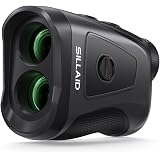
Start by honestly assessing your club distances during practice sessions. Use a rangefinder or a golf app to measure your actual carry distances for different clubs. Pay attention to how far your *average* shot travels, not just your best. On the course, prioritize getting the ball to the green, even if it means landing a little long. As the video highlights, most trouble on a golf course is found short of the green, so being pin-high or slightly past is generally a far better outcome. Cultivating a realistic understanding of your distances is a fundamental aspect of effective course management and will significantly reduce penalty strokes.
4. Smart Short Game: The Power of Lower Loft Around the Green
While the video covers mistakes 1, 2, 3, and 5, the fourth common error often made by beginner golfers is related to the crucial short game around the greens. Many new players, eager to emulate professional shots, instinctively reach for their highest-lofted club—typically a 60-degree wedge—whenever they are just off the green. While these clubs are designed for high, soft shots that stop quickly, executing such shots with consistency requires an extremely high level of skill, precision, and practice. For a beginner, this approach often leads to disastrous outcomes, like hitting behind the ball, skulling it across the green, or leaving it far short of the target.
The smarter, more reliable strategy for beginner golfers around the green, especially when there are no obstacles between you and the flag (like bunkers or water), is to “use the ground” with a lower-lofted club. Opting for a pitching wedge, a 9-iron, or even an 8-iron allows you to play a “bump-and-run” shot. With this technique, the ball stays lower, lands sooner, and rolls out toward the hole like a long putt. The advantages are numerous: there’s less clubhead speed involved, fewer variables in the ball flight, and a much larger margin for error, making it significantly easier to achieve a consistent strike and get the ball closer to the hole.
Think of it as choosing the safest path to your destination. Instead of attempting a risky aerial maneuver, you are opting for a reliable ground route. While high-lofted wedges certainly have their place for advanced shots over obstacles, a beginner’s priority should be to get the ball on the green and rolling, giving themselves a realistic chance at making the next putt. Practice chipping with various lower-lofted irons to understand how much roll you can expect from each, and you’ll quickly discover a newfound confidence in your short game, leading to fewer frustrations and lower scores.
Beyond the Beginner Blunders: Your Golf Q&A
Why does my golf ball often curve sharply to the right (slice) after I hit it?
A slice usually happens because your club face is aimed open (to the right) at impact, while your club is swinging across the ball to the left. To fix this, aim your club face at your target and try to swing your club more straight or slightly to the right of the target line.
How can I consistently get the golf ball into the air when hitting it off the ground?
Instead of trying to ‘lift’ the ball, trust the club’s design to do the work. Focus on hitting the ball first, then the ground, by shifting your weight onto your lead leg as you swing through.
How do I know which golf club to use for different distances?
It’s important to know your average carry distance for each club, not just your longest shot. As a beginner, it’s often smart to choose ‘one more club’ than you think you need, especially when hazards are involved, to ensure you reach the target.
What’s the best way for a beginner to hit shots when close to the green?
For most shots around the green without obstacles, use a lower-lofted club like a 9-iron or pitching wedge. This allows for a ‘bump-and-run’ shot, where the ball stays low and rolls toward the hole, which is easier to control than a high-lofted shot.