
The pursuit of excellence in golf often leads enthusiasts to seek inspiration and instruction from the very best in the sport. While watching PGA TOUR players execute flawless swings and masterful short game shots in the video above provides immense visual learning, understanding the underlying principles can unlock significant improvements in your own game. Adopting these professional golf tips transcends mere imitation, focusing instead on the core strategies and mindsets that truly differentiate top-tier performance.
Indeed, countless hours of practice and dedication are required to reach the PGA TOUR level, yet many of their fundamental approaches are highly transferable. By meticulously breaking down their techniques into digestible components, amateur golfers can systematically enhance their skills. This guide will delve deeper into the professional insights often shared by PGA TOUR players, offering practical, data-driven advice to help you elevate your golf game.
Mastering the Fundamentals: The Foundation of PGA TOUR Players
Every PGA TOUR player, regardless of their unique swing style, adheres to fundamental principles that form the bedrock of their consistency and power. Grip, stance, and posture are not merely starting points; they are continuously refined elements ensuring optimal club control and balance. A strong grip, for instance, is not about squeezing the club tightly; conversely, it involves a secure, neutral hold allowing for natural clubhead release.
Interestingly, research indicates that a consistent pre-shot routine, encompassing grip and setup, significantly reduces variability in ball striking among players of all levels. While amateur golfers often rush their setup, professionals dedicate precise attention to these initial steps before every shot. Consequently, they establish a reliable foundation for an effective swing, which is crucial for lowering scores.
The Art of a Consistent Grip
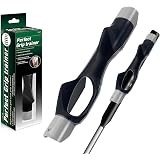
The grip serves as your only connection to the club, profoundly influencing swing plane and clubface control. Many PGA TOUR players opt for a neutral grip, aligning the clubface squarely at impact without excessive manipulation. A common data point suggests that a slight variation in grip pressure can alter clubhead speed by up to 5 mph, underscoring its importance.
Proper grip allows the hands to work in unison, transferring power efficiently from the body through the club. Conversely, an overly strong or weak grip can lead to compensations, such as hooks or slices, making consistent ball flight extremely difficult. Focusing on a relaxed yet firm grip pressure, as often advocated by professionals, promotes fluidity throughout the swing.
Stance and Posture: The Athletic Base
An athletic stance and balanced posture are indispensable for generating power and maintaining stability throughout the golf swing. Professionals maintain a balanced weight distribution, ensuring their spine angle allows for a free rotation of the torso. Studies have shown that poor posture can restrict hip rotation by as much as 20 degrees, severely limiting power generation.
Furthermore, the width of the stance varies depending on the club, offering greater stability for longer clubs and more agility for shorter irons. Emulating this adaptable approach, rather than a one-size-fits-all stance, allows for better control and force application across different shots. The setup dictates the potential for the entire swing, making it a critical area for focus.
Driving for Distance and Accuracy: Insights from the Long Game
The allure of a powerful, accurate drive is undeniable, and PGA TOUR players consistently demonstrate how to achieve both. Their strategy often involves maximizing clubhead speed while maintaining control, a delicate balance often misunderstood by amateurs. Instead of simply swinging harder, professionals focus on efficient body rotation and a coordinated sequence of motion.
Remarkably, tour average driving distance has increased steadily over the decades, now often exceeding 300 yards for many players, thanks to advancements in technology and refined technique. However, it’s their consistency in finding the fairway, rather than just raw distance, that truly impacts their scoring. This emphasizes the dual importance of power and precision.
Unlocking Clubhead Speed Through Efficient Rotation
PGA TOUR players generate immense clubhead speed primarily through their body’s rotation, particularly the hips and core. A common misconception involves over-reliance on arm strength, which often leads to a loss of balance and power. Data suggests that elite golfers exhibit a significant separation between hip and shoulder rotation, known as the “X-factor,” which contributes substantially to speed.
Developing this rotational power requires specific drills that isolate hip and core movement, allowing the arms to act as extensions of the body’s momentum. Instead of forcing the swing, professionals allow their bodies to naturally accelerate the club. This dynamic rotation, in contrast to a purely linear motion, creates a slingshot effect, propelling the ball further.
The Pursuit of Fairway Finding Accuracy
While distance is exciting, accuracy off the tee is paramount for setting up subsequent shots and avoiding penalty strokes. Professionals meticulously analyze course conditions and pin positions before selecting their target, sometimes opting for a less powerful but more controlled shot. This strategic thinking minimizes risk and maximizes their chances of reaching the green in regulation.
Statistical analysis highlights that hitting fairways correlates strongly with lower scores, even more so than extreme driving distance. A fairway hit, for instance, improves the probability of hitting the green by a significant margin compared to a rough lie. Learning to manage the driver by focusing on a consistent strike and controlled trajectory, rather than always chasing maximum yardage, can dramatically improve your golf game.
Mastering the Short Game: Scoring Like a Professional
Many golf instructors and PGA TOUR players often assert that the short game—comprising putting, chipping, pitching, and bunker play—is where scores are truly made or broken. This area accounts for a disproportionately high number of shots during a round, meaning even marginal improvements can yield substantial results. Professionals dedicate significant practice time to these crucial aspects, understanding their profound impact.
Studies show that approximately 60-65% of all shots taken in a round occur within 100 yards of the hole. This compelling statistic underscores why proficiency in the short game is non-negotiable for serious golfers. While long drives might impress, a stellar short game consistently converts opportunities into birdies and saves pars.
The Precision of PGA TOUR Putting
Putting is often considered a game within a game, demanding a blend of technical skill, green reading ability, and unwavering nerve. PGA TOUR players possess an incredible knack for judging speed and break, converting more putts from challenging distances than amateurs. Their putting strokes are typically simple, repetitive, and devoid of unnecessary moving parts.
Data from ShotLink reveals that the average PGA TOUR player converts over 90% of putts from inside 5 feet, and still maintains a respectable 50% success rate from 10 feet. This level of consistency is achieved through focused drills on rhythm, tempo, and aiming. Practicing with feedback tools and dedicating time to understanding green contours, as the pros do, is essential for improving putting accuracy.
Chipping and Pitching: Control and Creativity
Around the greens, PGA TOUR players exhibit a dazzling array of shots, choosing the right club and technique for every lie and pin position. Their chipping and pitching are characterized by excellent distance control and the ability to spin the ball, allowing them to stop it quickly near the hole. This mastery comes from understanding club-face loft and swing path.
One common principle is the “low point control,” ensuring the club makes contact with the ball first, then the ground, for crisp, consistent strikes. Statistics indicate that a strong short game can save a player an average of 2-3 strokes per round compared to those with weaker skills. Moreover, exploring different clubs for chips and pitches, rather than relying solely on a single wedge, opens up a world of shot-making possibilities.
The Mental Game and Course Management: Playing Smarter, Not Harder
Beyond the physical mechanics, the mental aspect of golf and astute course management represent critical differentiators for PGA TOUR players. They possess an exceptional ability to stay focused, manage emotions, and make strategic decisions under pressure. This mental toughness is cultivated, not innate, and involves deliberate practice.
Conversely, many amateur golfers often allow one bad shot to derail an entire round, failing to reset mentally. Professionals, however, maintain composure, analyze their mistakes objectively, and commit to the next shot without lingering on past errors. This resilience is a hallmark of elite performance, significantly contributing to their consistent success and ability to continually improve golf game.
Developing Mental Toughness on the Course
PGA TOUR players employ various techniques to cultivate mental toughness, including visualization, pre-shot routines, and controlled breathing. They visualize successful shots before execution, reinforcing positive outcomes and building confidence. Furthermore, a consistent routine helps them stay in the present moment, mitigating anxiety and external distractions.
Sports psychology studies indicate that visualization can activate similar neural pathways as physical practice, effectively training the brain for performance. Developing this mental discipline, perhaps through meditation or focused practice, can significantly enhance decision-making and shot execution. Learning to compartmentalize each shot and move on from mistakes is a powerful skill.
Strategic Course Management: Minimizing Risk, Maximizing Reward
True golf mastery involves not just executing shots but also making intelligent decisions about where to hit them. PGA TOUR players meticulously plan their way around each hole, considering hazards, pin positions, and their own strengths and weaknesses. They prioritize conservative plays when necessary, avoiding unnecessary risks that could lead to double bogeys or worse.
Statistical analysis demonstrates that professional golfers are much more likely to play to the fattest part of the green, rather than chasing every pin, especially on difficult holes. This smart play minimizes the potential for missed greens and subsequent challenging up-and-downs. Understanding your own shot dispersion and playing to your strengths, rather than against them, is a cornerstone of intelligent course management.
Tee Up Your Questions: PGA TOUR Player Q&A
What are the most important fundamental elements in golf?
The most important fundamental elements in golf are your grip, stance, and posture. These are continuously refined to ensure optimal club control and balance throughout your swing.
Why is the ‘short game’ so important in golf?
The short game, which includes putting, chipping, and pitching, is crucial because it’s where most scores are made or broken. Approximately 60-65% of all shots in a round occur within 100 yards of the hole.
Should I try to hit the golf ball as far as possible every time?
While hitting far is exciting, consistency in finding the fairway is more important for lowering scores. Focusing on accuracy and controlled shots, rather than just maximum distance, can dramatically improve your game.
What is a ‘grip’ in golf and why does it matter?
Your grip is how you hold the golf club, and it’s your only connection to it. A proper grip profoundly influences your swing and clubface control, allowing for efficient power transfer and consistent shots.